What Every Liverpool Tenant Needs to Know
Damp and mould in Liverpool are not just unsightly marks on walls or ceilings. Awaabs Law was introduced because damp and mould can seriously affect your health, damage your home and, in serious cases, put lives at risk.
The death of two-year-old Awaab Ishak tragically highlighted the dangers of prolonged exposure to damp and mould in the home. Following widespread public concern, new legal requirements known as Awaab’s Law are being introduced to ensure landlords take damp and mould complaints seriously and act within specified timescales.
What Is Awaab’s Law?
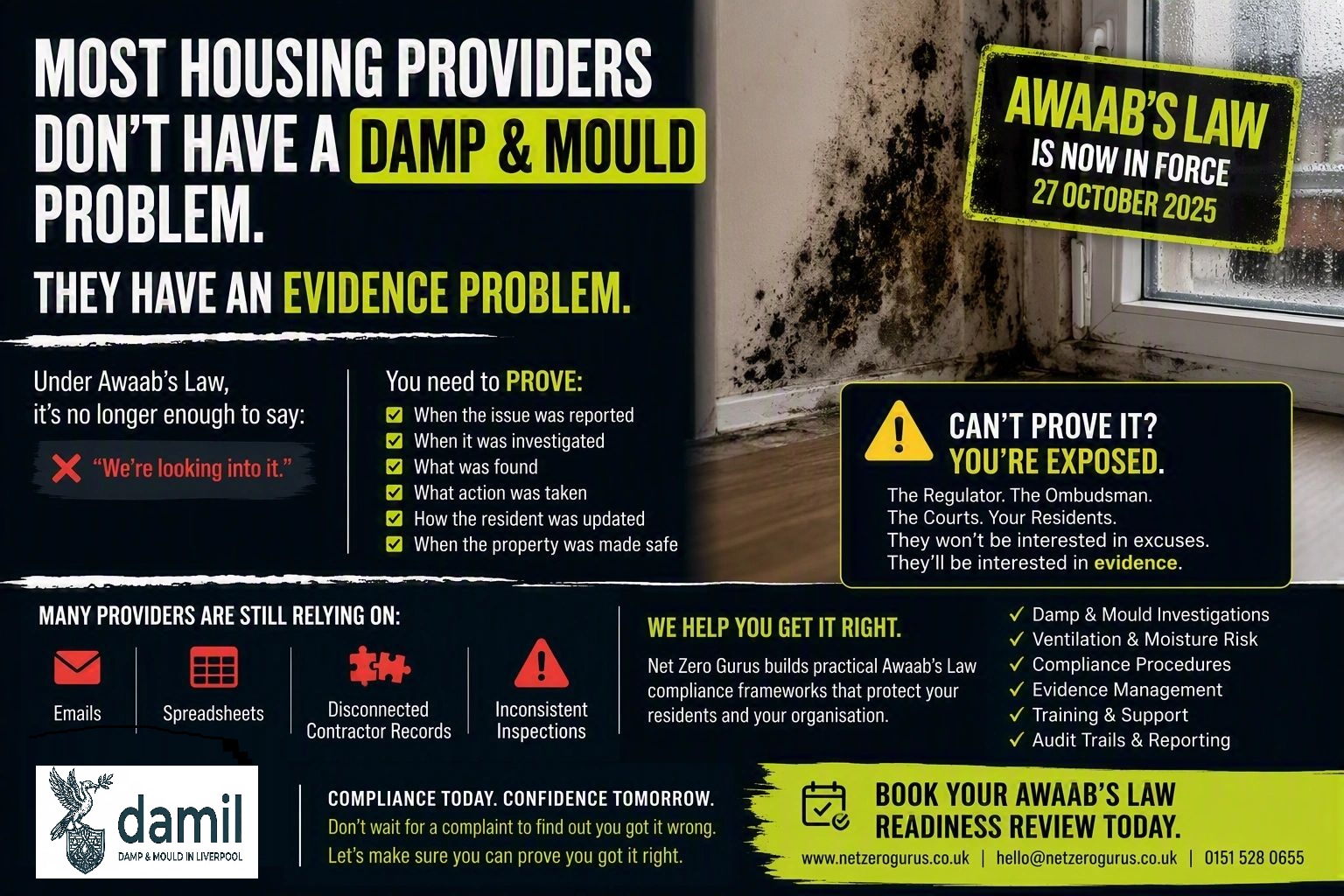
Awaab’s Law is designed to protect tenants living in social housing by requiring landlords to investigate and address hazardous conditions, including damp and mould, within defined periods.
For too long, some tenants have reported mould problems repeatedly without effective action being taken. Awaab’s Law aims to ensure that dangerous living conditions are no longer ignored.
Why Damp and Mould Should Never Be Ignored
Many people assume mould is simply a housekeeping issue, but this is often untrue.
Damp and mould can be caused by:
- Condensation
- Inadequate ventilation
- Poor insulation
- Water leaks
- Rising damp
- Penetrating damp
- Building defects
When excess moisture is allowed to remain inside a property, mould spores can quickly develop and spread throughout the home.
How Damp and Mould Affect Health
Mould releases microscopic spores into the air that can be inhaled every day by occupants.
Exposure can contribute to:
- Coughing and wheezing
- Breathing difficulties
- Asthma attacks
- Chest infections
- Sinus irritation
- Skin conditions
- Eye irritation
Children, elderly people and those with pre-existing respiratory conditions are particularly vulnerable.
If black mould is visible, it is likely that mould spores are already circulating within the indoor environment.
Dust Mites, Damp and Mould

Many people are unaware that damp homes can also create the perfect conditions for dust mites to thrive.
One species commonly associated with damp indoor environments is Tyrophagus putrescentiae, often referred to as the mould mite. Unlike ordinary house dust mites, these mites are frequently found in areas where mould is growing or where moisture levels remain consistently high.
Tyrophagus putrescentiae feeds on microscopic fungi, mould spores and decaying organic matter. As mould develops on walls, ceilings, furnishings and other surfaces, it can provide an ideal food source for these tiny creatures.
Although usually invisible to the naked eye, large populations of mites can develop within damp properties and may contribute to poor indoor air quality. Exposure to mites and their waste products has been linked to allergic reactions in some individuals, including:
- Sneezing and nasal irritation
- Itchy eyes
- Skin irritation
- Worsening asthma symptoms
- Respiratory discomfort
The presence of mould mites is often an indication that excessive moisture and mould growth have existed for some time.
By addressing the underlying causes of damp, condensation and mould, property owners can not only reduce mould growth but also help prevent conditions that allow mites such as Tyrophagus putrescentiae to flourish.
Damp and Mould Liverpool: More Than Just Black Spots on a Wall
When people think about damp and mould Liverpool homes experience, they often focus on visible black mould staining. However, the hidden effects can be far more serious. Excess moisture can encourage mould growth, increase airborne spores and create favourable conditions for mould mites such as Tyrophagus putrescentiae.
This is why identifying and treating the root cause of damp problems is essential for protecting both the property and the health of those living within it.
This section should also help the article rank for related searches such as:
- mould mites
- mould mite infestation
- Tyrophagus putrescentiae
- mites caused by damp
- dust mites and mould
- health effects of damp homes
- mould-related allergies
- damp and mould Liverpool health risks
Common Signs of Damp and Mould
Look out for:
- Black spots on walls and ceilings
- Mould around windows
- Water droplets on glazing
- Musty smells
- Peeling wallpaper
- Damp patches
- Discoloured paint
- Mould behind furniture
- Cold, damp walls
Ignoring these warning signs can allow the problem to worsen, leading to more extensive and costly damage.
Is It the Tenant’s Fault?
Not necessarily.
While everyday activities such as cooking, showering and drying clothes indoors produce moisture, many damp and mould problems are linked to issues with the building itself.
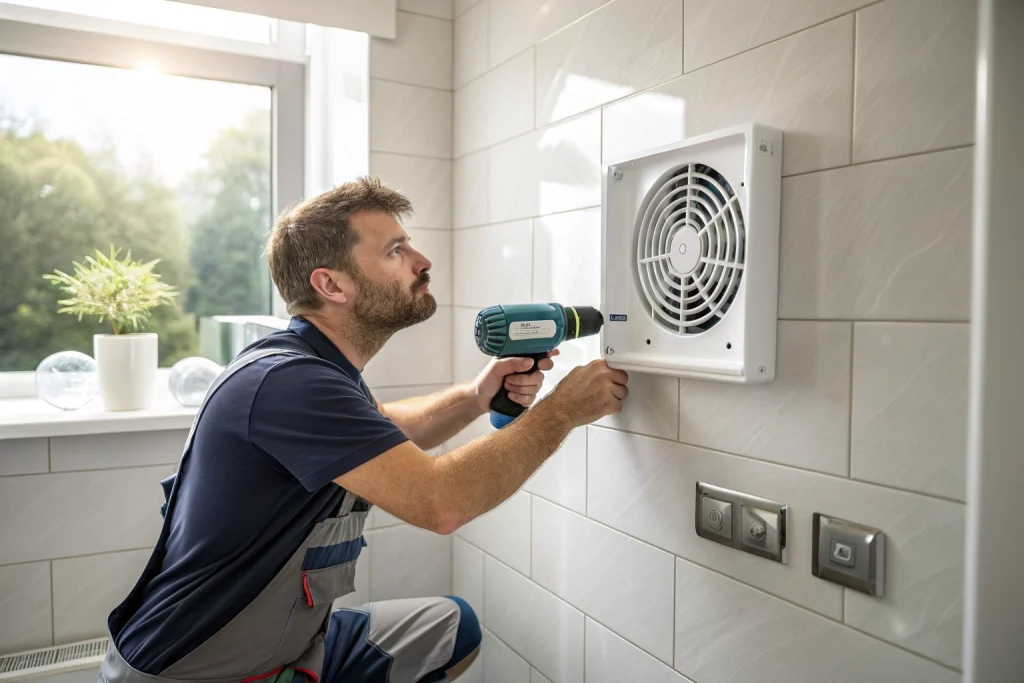
Poor ventilation, missing insulation, thermal bridging, defective extractor fans, leaking pipework and structural defects can all contribute.
An investigation is often required to establish the true cause.
What Should You Do If You Discover Mould?
If you are a tenant:
- Report the problem to your landlord as soon as possible.
- Keep records of emails, letters and photographs.
- Document any health symptoms that may be connected.
- Continue reporting the issue if it is not resolved.
- Seek professional advice if the problem persists.
If you are a landlord or housing provider:
- Investigate promptly.
- Identify the root cause.
- Keep records of inspections and actions taken.
- Ensure repairs are completed correctly.
- Monitor the problem after remedial works.
Professional Damp and Mould Investigations in Liverpool
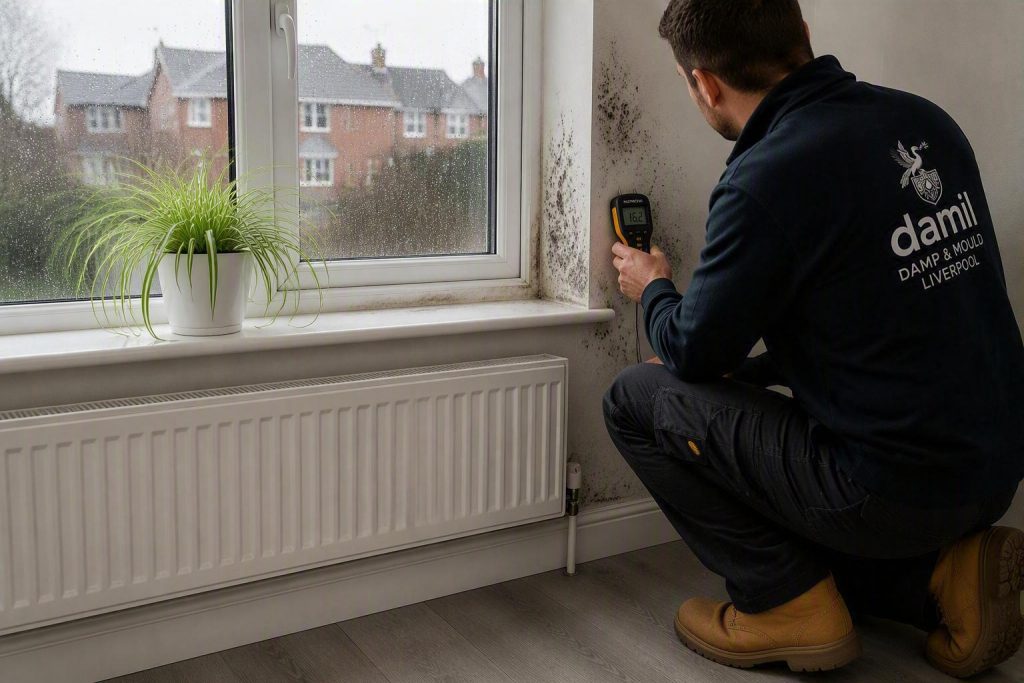
At Damil, we help homeowners, landlords, letting agents and housing providers identify the root causes of damp, condensation and mould problems.

Our inspections can help determine whether the issue is being caused by:
- Condensation
- Ventilation deficiencies
- Building defects
- Thermal bridging
- Water ingress
- Rising damp
- Occupancy factors
Understanding the cause is the first step towards finding a lasting solution.
Don’t Ignore Damp and Mould
Damp and mould rarely disappear on their own. What begins as a few black spots around a window can quickly spread throughout a property, affecting both the building and the health of those living inside it.
If you have concerns about damp, condensation or mould in your Liverpool property, arranging a professional inspection can help identify the problem before it becomes more serious.
Damil – Damp & Mould Liverpool
Helping Liverpool residents understand the cause of damp and mould problems and find effective long-term solutions.
To learn more about damp and mould click here >> Condensation Damp and Mould in Liverpool
Help With Condensation Damp and Mould
If you would like further help and advice with your condensation, damp and mould issues, and live in the Liverpool or surrounding areas, you can call us direct on 0151 374 0044 or call Andy on 07831 564351 for some free help and advice.
Contact DAMIL below
email: hello@damil.info
Tel: 0151 374 0044